
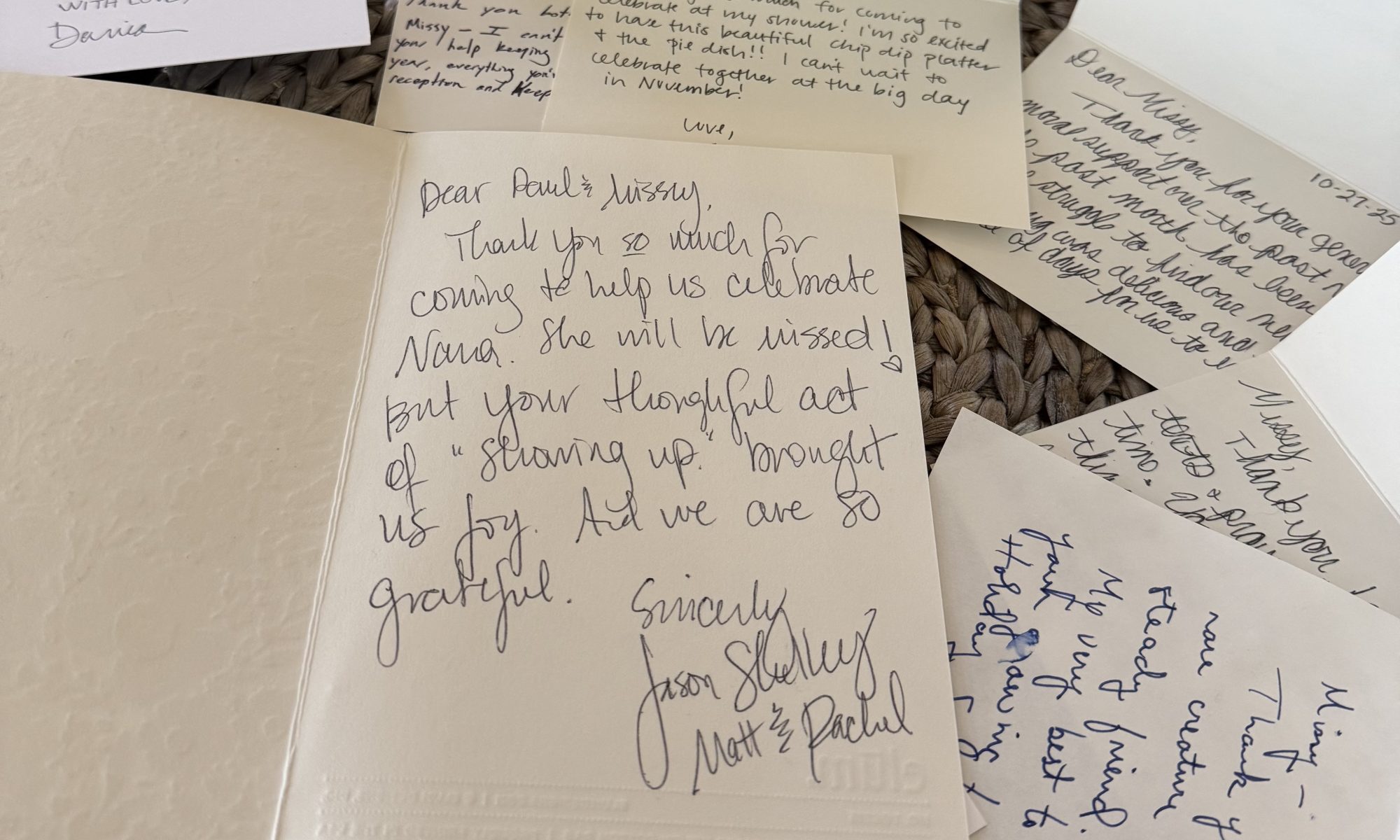
I got the most lovely surprise from a friend this week. He sent me a picture of a letter I had written him right after his father died, with a text saying it had been 25 years since his dad had passed and how he’d kept it all these years and how much it had meant to him. It stopped me in my tracks, seeing how I also have saved pretty much any handwritten letter, note, thank you card I’ve ever received.
But I thought it was just me, the weirdo, who did that.
Being a writer, to no one’s surprise, words are my love language. Wordsmithing a note for someone special, someone I love, or for a momentous event requires me to sit, door closed and spin my loom of emotional prose, sometimes until I’m drained. I’ll take a few days to write someone an important letter. The words all have to be dusted and polished, but the feeling behind them has to convey the connection the person deserves—a connection, in just a couple of paragraphs, that they should experience in their soul. Empty words don’t exist for me.
Having to sign a birthday card in haste with “love, Missy,” is a little painful. I hate it.
I have a friend who says all she ever wants for her birthday is a heartfelt letter, nothing else. Words about you, that belong to only you on your special day? Girl, I get it!
That particular friend has also granted me the honor of writing her eulogy when the time comes, so of course I’ve got notes, files and remembrances already tucked away in preparation so in my moment of despair I won’t have to dig too hard to be creative. I have toyed with the idea of writing hers now, and giving it to her to read in this world, because think about it—wouldn’t we love to read what wonderful things are said about us while we’re still here to read them? And then there’s always that chance that I’ll be called to leave this world before her and then, well, I’ll have messed that up “real good.” But then I also fear the test of fate it might be to write hers now, so I put my notes back in the drawer with her name on it. Let’s not rush it.
I’ve also written some scathing letters. Those words just as carefully chosen as ones of love or congratulations. If I take the time and effort to write you a letter in pain or sorrow you better believe you’re important in my life, and I probably love you tremendously, because I don’t waste that energy on people who don’t matter to me. When I walk away without a proper acknowledgement, you can be sure it’s because I’ve already said it to you, numerous times, and you’ve chosen not to hear me. That’s the worst place to ever fall into with me of which there is no return.
Years ago during a family crisis, I wrote my father a pretty harsh letter of desperation in an appeal to his sense of emotion about how his behavior was affecting our family and begging him to make different choices. As a brokenhearted daughter, I had agonized and cried over it for hours. To have to speak to my father, who I loved, in such a way felt like torture. Only later did I find out my mother intercepted it, read it, and never gave it to him. I still carry the wound of that betrayal, of my words in my most emotional plea being deemed meaningless. My words were regarded unworthy of even being read, much less considered. That one stung.
Words are powerful. To have a handwritten letter that someone took the time to sit with and give you, so you can hold it and reread it forever, is recognition that you matter to them. When what you are going through or what you did means enough for someone to stop their busy day of traffic, bills, appointments, chores and endless lists and write you a note of sympathy or thanks, it’s an acknowledgment of their gratitude that you exist in their world. They are saying their life is better because you are in it. How do you ever throw a note like that away?
At the end of my last grief class I wrote each of our attendees a letter to accompany a little gift I gave them. The gift was nice, meaningful, but the letter I wrote was the important part. What words could I say to them that would sit in their soul and make them feel strong, brave, and loved as they ventured forward? After all I had only known them for 10 weeks. I wasn’t writing these letters based on a lifetime of memories I had of them or the loved one they had lost. It was hard until I realized that even though I had only known them a short time, the level of intimacy I shared with them had depth. They had shared gasps of dripping, unprocessed emotion with me as they spoke of the loss of their father or spouses that they may not had shared with anyone else. Drawing on that, when I sat down with pen in hand, the letters almost wrote themselves. I felt such love and pride for all of them as I wrote.
I wanted them to take something that they could save, written in my hand so the tenderness of touch could be felt when they read it. I wanted them to feel cradled. And one day when they were looking through a drawer they might find it again, read it and reflect on how far they had come in their healing, I hope—exactly like the text I had received from my friend.
They needed to be reminded that they mattered—their pain mattered. Tremendous loss and pain have their own way of making you feel just the opposite. It’s often lonely, and it feels like no one cares, but if you are holding a handwritten note from someone it’s a tiny reminder that the feeling that no one cares is only your pain mistreating you. Pain likes to do that.
And if someone has extended an act of kindness for you, let them know. Write them a note. Let them know you appreciate being loved and thought of, because it’s a lot easier to be overlooked than it is to be loved. To be loved requires intention, to be thought of and remembered, requires effort.
Make the effort to love people in the smallest way, even with a short handwritten note. Don’t let our souls be bland.
The five minutes it takes you to write a kind note, could still be impacting them 25 years later. That’s the glimmer, more like a disco ball of human connection.
So save your little notes of love and support you get from others.
Put them in a drawer somewhere.
They’ll wait for you.
And know if you have ever written a note of heartfelt thanks, love, sympathy, thoughtfulness or gratitude to me I have it saved in a drawer or in my box, but more importantly I have it saved in my heart and yes, I do go back and reread them. Because that’s the beauty of handwritten notes, no matter where you tuck them away they have a way of being found again just when you need them.

